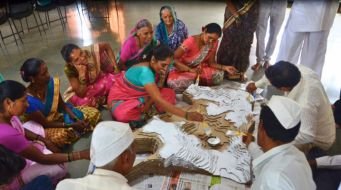
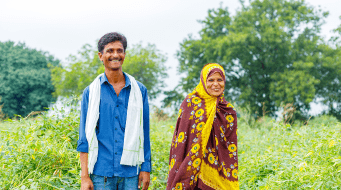
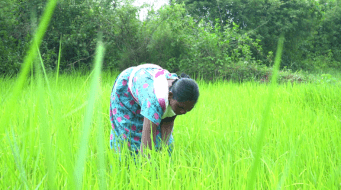
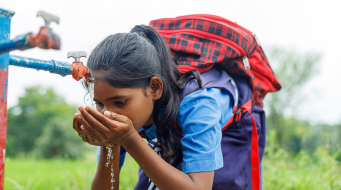
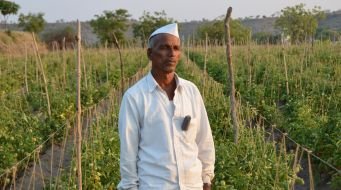
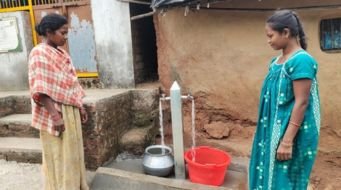
The village of Borgaon Math relied on one hand pump, leading to shortages and conflicts. Bhagirathi, a farmer, often traveled long distances for water, impacting daily life and her children’s education .WOTR’s efforts have provided reliable water access, improving living conditions and education.
A Better Tomorrow
Stories, Practices, and Solutions
In rural Maharashtra, communities have become water stewards with support from WOTR. Villages like Borgaon Math and Bori Khurd have adopted rainwater harvesting, micro-irrigation, and organic farming, boosting water availability and crop yields.
Diversion-Based Irrigation (DBI) merges ancient practices with modern technology, using gravity and slope to water crops without external energy. Understanding site conditions is crucial for successful DBI implementation, supporting sustainable agriculture.
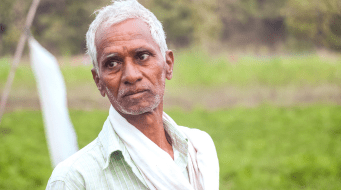
Prakash, 62, struggled to keep up with the workload on his farm. A seed weeder provided by a project by Wells Fargo and WOTR helped ease his burden. His story is about a father’s love and sacrifice for his children’s future.
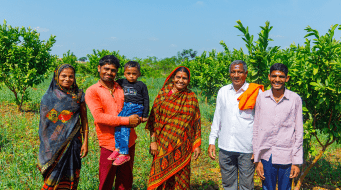
In Bhandar Kumta, Balaji Laxman Mule and his family have long faced water scarcity, limiting their farming to half the year. With the introduction of farm bunding, their well now retains water year-round, doubling their crop yields and income. The project with Wells Fargo in Bidar has brought profound change, turning their dream of water security into reality and enabling sustainable, year-round farming.
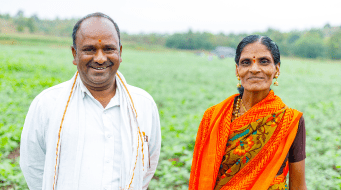
Through a watershed development project by Wells Fargo and WOTR, Lingi village, including farmer Bapurao Rajendra Patil’s land, transformed dramatically. Water structures like Water Absorption Trenches increased well water levels by 3 feet, enabling cultivation across all 15 acres year-round.
Furkhan and Shahinbee Patel struggled with farming due to severe water scarcity on their 11-acre farm in Hokrana village of Karnataka. In 2022-23, a restoration project by Wells Fargo and WOTR created a water harvesting potential of 22 million liters, significantly improving their irrigation and doubling their harvests.
Paulina Mundu, a 40-year-old farmer in Khunti, Jharkhand, fulfilled her childhood dream of farming upon returning home. However, water scarcity posed a challenge, leading her to construct a farm pond under MGNREGA in 2017. Despite initial limitations, assistance from Axis Bank Foundation and WOTR in 2019 enabled Paulina to expand and improve the pond, enhancing irrigation capacity.
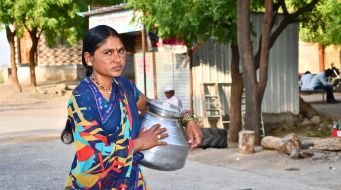
Water is essential for life and a cornerstone of sustainable development. Climate change, population growth, increasing urbanisation, and unsustainable practices are placing unprecedented strain on global water resources. Achieving water security – the ability to ensure sufficient, safe and accessible water for everyone’s needs – has become a pressing challenge in the 21st century.
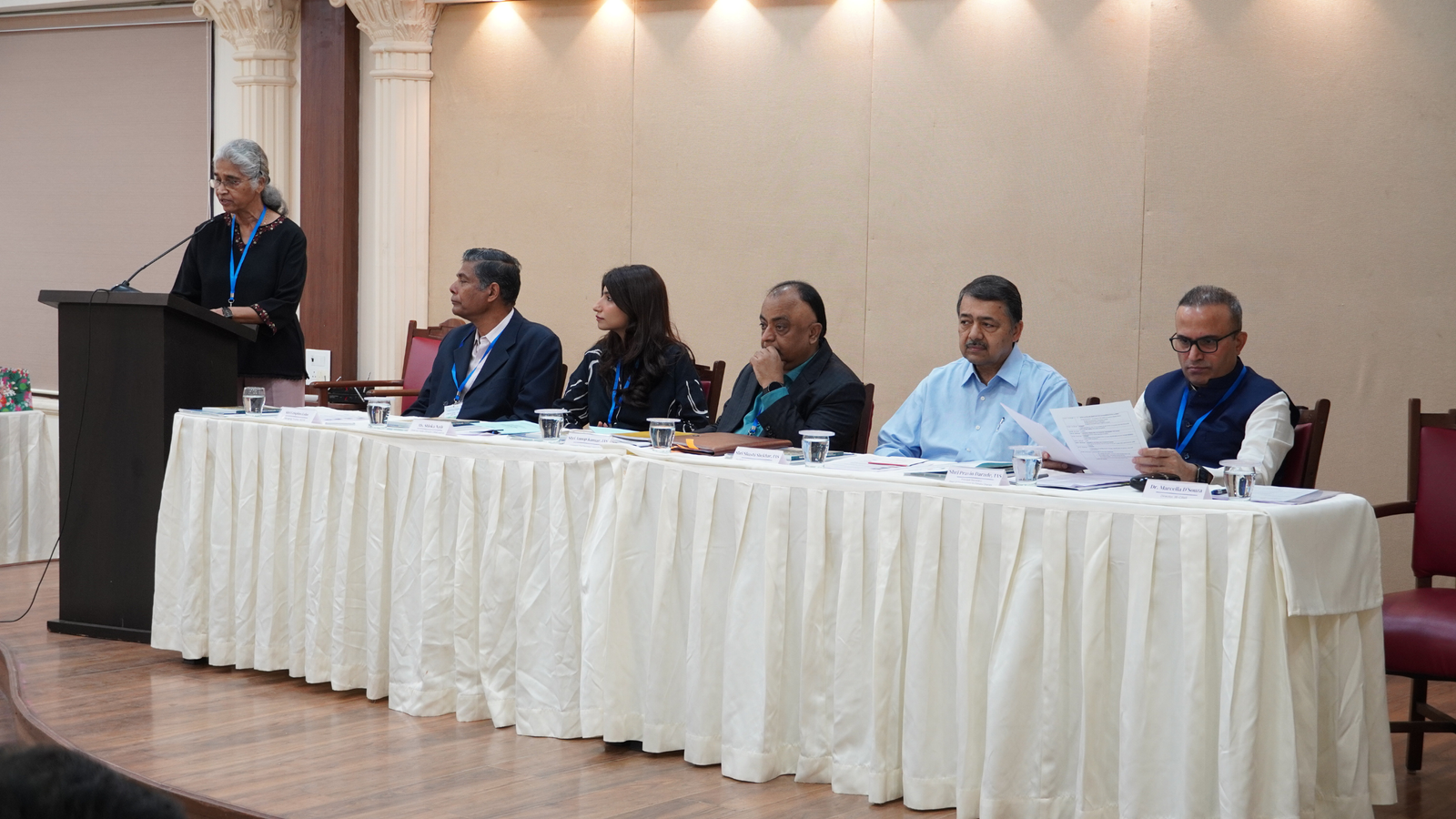
In response to Maharashtra’s deepening water crisis, a critical one-day workshop titled ‘Securing water in the time of climate change through natural ecosystems management” brought together leading experts, policymakers, and stakeholders on March 21, 2024.
By Categories
By Tags
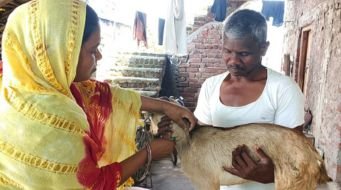
Pashu Sakhi initiative empowers rural women as para-vets, improving livestock health, boosting incomes, and strengthening climate-resilient rural livelihoods.
A socio-technical watershed approach helped communities restore ecosystems, strengthen institutions and secure livelihoods, creating resilience that has endured for generations.
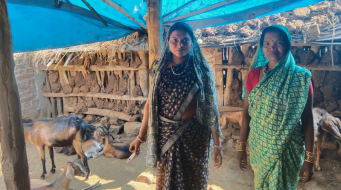
The Rabi Jal Pehal project brought trained Pashusakhis to Agarbatti’s doorstep, offering affordable livestock care and practical guidance.
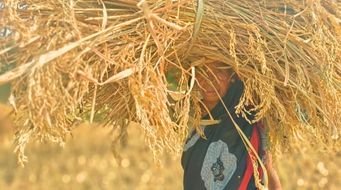
Explore the golden beauty of Chhattisgarh’s harvest, where tradition meets modern science in the vibrant fields of India’s rice bowl.
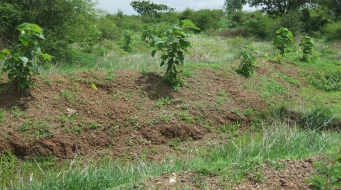
Read how the results of community-led watershed development remain evident even after 25 years in the rain-shadow area of Maharashtra.
Leopards in Pune reveal how cities reshape wildlife boundaries, forcing us to rethink coexistence beyond romance, fear, and reactive conservation.
Women of this village in Odisha walked eight kilometers daily for drinking water until the solar-powered borewell transformed lives.
India’s Supreme Court reimagines corporate responsibility, weaving environmental stewardship, biodiversity protection, and sustainable development into the heart of business ethics.