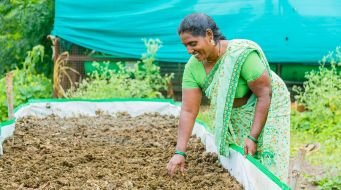
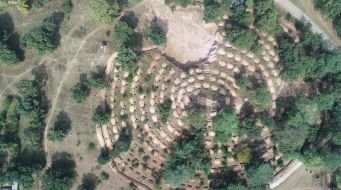
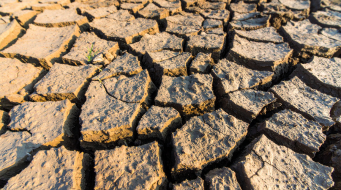
This blog post is based on a unique multilayer farming initiative implemented as part of the “Integrated Water Resources Development and Promotion of Ecosystem-based Adaptation (EbA) in Maharashtra and Telangana—A Practice and Knowledge Embedded Approach” project, which is supported by the Honeywell Hometown Solutions India Foundation (HHSIF).
A Better Tomorrow
Stories, Practices, and Solutions
As climate change tightens its grip, the resilient communities in Chhattisgarh need your support more than ever
As Axis Bank Foundation strives to improve the livelihoods of two million households by 2026-27, one of the intensifying and worrying hurdles our communities face is the disproportionate impact of climate change. Climate adaptation is, hence, an urgency!
Carbon footprint is the total amount of greenhouse gases (including carbon dioxide and methane) that are generated by human actions. By making small changes to our daily actions, one can decrease their carbon footprint.
October Heat refers to the rise in temperature that occurs during the post-monsoon and pre-winter season. In recent years, however, October has increasingly felt like an extension of summer rather than an early indication of winter.
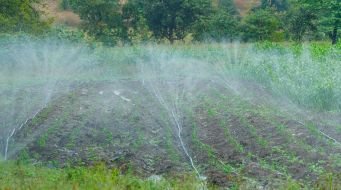
The Group Micro Irrigation (GMI) model promotes equitable groundwater access and encourages the adoption of efficient micro-irrigation systems among farmers.
Odisha’s geothermal landscape holds immense potential, with untapped resources and exciting future prospects. Various initiatives are underway to explore and harness this energy, paving the way for sustainable development in the region.
India’s agricultural sector faces challenges from conventional practices, but adopting natural farming can enhance soil quality, promote biodiversity, and improve food security while benefiting farmers economically.
Amidst the challenges of the Covid-19 lockdown, Rayagada district in Odisha harnessed community strength to drive change. Through initiatives like sustainable agriculture, alternative livelihoods, and the construction of watershed structures, villagers collaborated to improve water management, boost incomes, and enhance resilience against climate and economic hardships.
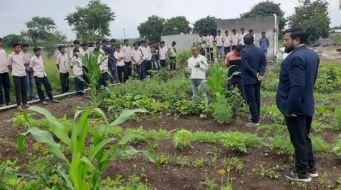
WOTR Centre for Resilience Studies (W-CReS) and the Indian Institute of Tropical Meteorology (IITM) partner to combine advanced climate science research with community-focused initiatives.
By Categories
By Tags
W-CReS researchers’ journey across Maharashtra documenting good O&M practices turned into a travel across diverse terrains and lived realities, with each step testing perception and decision-making
Mahavir’s farm has moved from producing what felt safe to what the local market needs.
The growing use of synthetic and glass-coated kite thread, commonly known as manjha, has turned a leisure activity into a serious public safety and environmental issue
In rain-dependent landscapes, Participatory Net Planning puts people at the centre of watershed decisions, building ownership that lasts beyond projects, it creates site-specific solutions that strengthen livelihoods.
32-year-old Menej Raito of Kumbhijal village in Odisha’s Rayagada district earn an income in his own village and does not need to migrate anymore.
Read how ecohydrology provides the scientific foundation needed to link ecosystem restoration with reliable water outcomes.
Depleted soil is quietly reducing the nutrients in our food, driving hidden hunger despite full plates and rising food production.
Trees Transform Nallavelly village as 10,000 saplings revive barren drylands through community action, scientific planning, and sustainable rural afforestation.