As WOTR proudly celebrates 30 years of fostering sustainable development in Indian communities, we’re thrilled to reflect on our transformative partnership with IndusInd Bank. In a recent conversation with us, Matilda Lobo, Head of CSR at IndusInd Bank, eloquently highlighted the remarkable impact this collaboration has brought about in the lives of countless people.
A Better Tomorrow
Stories, Practices, and Solutions
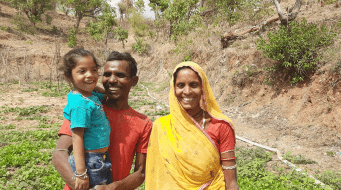
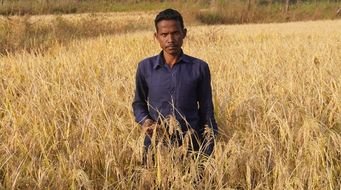
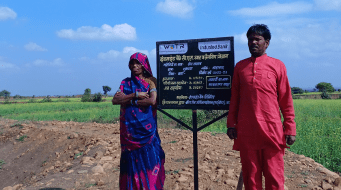
Years of low yields took a toll, but Kamli Bai refused to surrender. During the Rabi season, she worked tirelessly to establish a 0.1-hectare demo plot, her actions echoing the efforts of nine other farmers in Modwa village. Selected by the Village Development Committee and guided by WOTR, Kamli Bai diligently implemented every step, determined to prove these new methods could work. This year, a remarkable change swept through Kamli Bai’s fields.
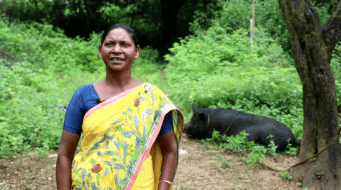
Pig farming is considered an integral part of life amongst the tribal population in Jharkhand, and many households practice backyard piggery with one or two pigs. Bahamani Purty, 45, lives in Otongora village, in Khunti, Jharkhand with her husband Marshall, and had been rearing pigs for a few years. In 2019, while attending a gram sabha meeting, Purty learnt that pig rearing was being promoted as an intervention under Axis Bank Foundation’s Sustainable Livelihoods Programme.
Businesses face escalating challenges from climate change affecting global agriculture. The solution lies in investing in climate-smart agriculture, which offers proactive strategies for resilience and market opportunities. Climate-smart agriculture, defined by the FAO, includes sustainable productivity increases, enhanced resilience, and reduced emissions.
India’s rural biodiversity, vital for resilience against climate change, faces threats from habitat loss and climate variability. Preserving it through community-based conservation and sustainable livelihoods is essential for human survival and a balanced coexistence with nature.
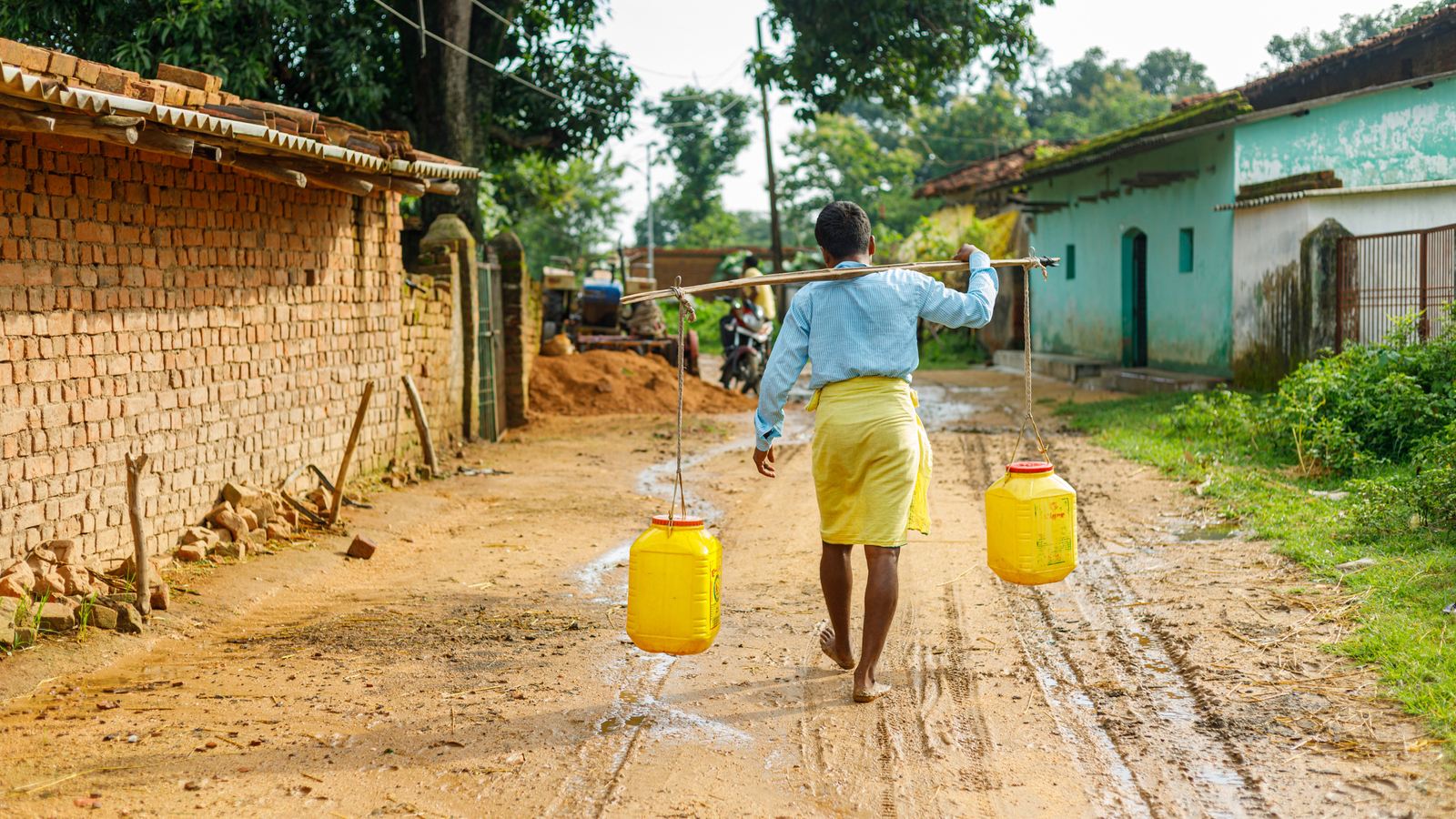
In rural India, water scarcity is a harsh reality impacting communities’ lives profoundly. Through watershed development, communities are empowered to heal the land holistically, from ridge to valley, ensuring water security, improved health, and livelihoods.
Last week, Finance Minister Nirmala Sitharaman presented the Interim Budget in the Lok Sabha, outlining key initiatives and their impact on rural India. Here are the major highlights and figures.
In rural India, communities grapple with climate change, erratic rainfall, and water scarcity. WOTR and HDFC Bank Parivartan’s 14-year partnership aims to tackle these challenges, impacting over 14,500 households across Jharkhand, Chhattisgarh, Maharashtra, and Odisha.
Can Corporate Social Responsibility (CSR) lead the way in addressing India’s rural environmental challenges, emphasizing the urgent need for a shift in focus towards environmental stewardship to ensure sustainable rural development?
Axis Bank Foundation and WOTR have successfully launched The Sustainable Livelihood Programme in 25 villages of the Maddur & Damargidda Mandals of Narayanpet district in Telangana
By Categories
By Tags
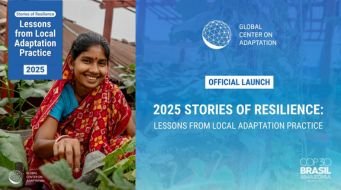
Drawing from work with smallholder farmers—from Kumbharwadi in Maharashtra to Madaul in Odisha—WOTR has contributed key experiences, insights, and evidence to the Stories of Resilience 2025, a publication launched by the Global Centre on Adaptation (GCA) at the United Nations Climate Change Conference in Belém, Brazil.
How can smallholders farm fish while safeguarding their local ecosystems? One promising answer lies in farm ponds.
Read how a school, and ultimately an entire village in Maharashtra, was transformed with clean toilets
Phool’s journey from uncertain, monocropping to stable, climate-resilient agriculture shows how access to irrigation, diversification, and community support can transform livelihoods.
Grasslands are often mistaken for empty lands needing trees, but they are rich, climate-resilient ecosystems. Understanding their unique biodiversity, carbon storage, and cultural value is essential to ensuring conservation efforts don’t unintentionally cause harm.
Making every drop count in Maharashtra’s rainshadow.
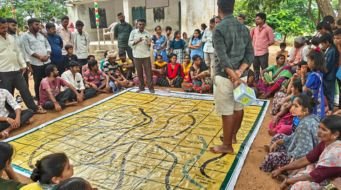
Recently, multiple large-scale awareness campaigns were conducted in 15 villages across diverse regions of Rangareddy and Jalna districts in Telangana and Maharashtra, respectively, where the Water Stewardship Initiative (WSI) is being implemented.
UNEP highlights the growing divide between climate impacts and adaptation finance.