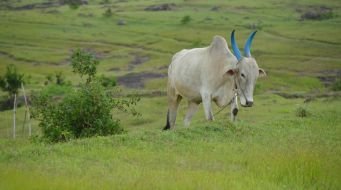
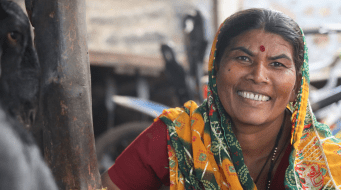
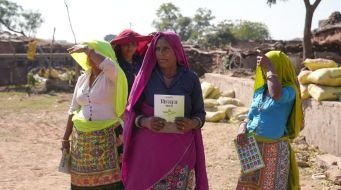
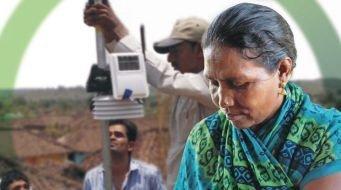
The Rabi Jal Pehal project brought trained Pashusakhis to Agarbatti’s doorstep, offering affordable livestock care and practical guidance.
A Better Tomorrow
Stories, Practices, and Solutions
Exploring village-based systems through Ecosystem-based Adaptation (EbA) offers promising, sustainable solutions for the livestock sector.
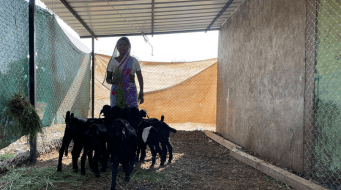
Sunita Jadhav from Bhandar Kumtha village, once struggling with daily wages, found new hope through goat rearing with support from Wells Fargo and WOTR. This venture provided her family financial stability, allowing her to earn a significant income and construct a shed for the goats’ safety.
Babai Sahadev Selhar, aged 52, and her family, long-time traditional goat rearers in Beed, faced mounting challenges in recent years. Residing adjacent to a forest, their livelihood was threatened by persistent wild animal attacks, resulting in a significant loss of income, nearly a third of their total earnings. In response, Selhar was graciously provided with a goatshed by WOTR, facilitated through the Axis Bank Foundation’s ‘Sustainable Livelihood Programme in Maharashtra’.
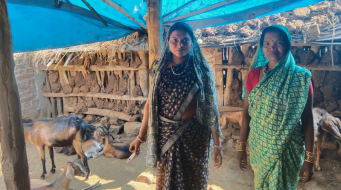
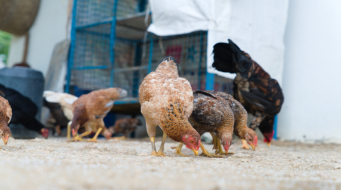
A large majority of the families in Narayanpet, Telangana are either wage labourers or small and marginal farmers who own less than 1Ha. of land. They have meagre incomes, limited access to resources, and no additional skill or financial support available to generate an alternate income. Keeping these factors in mind, the families were given support with backyard poultry farming.
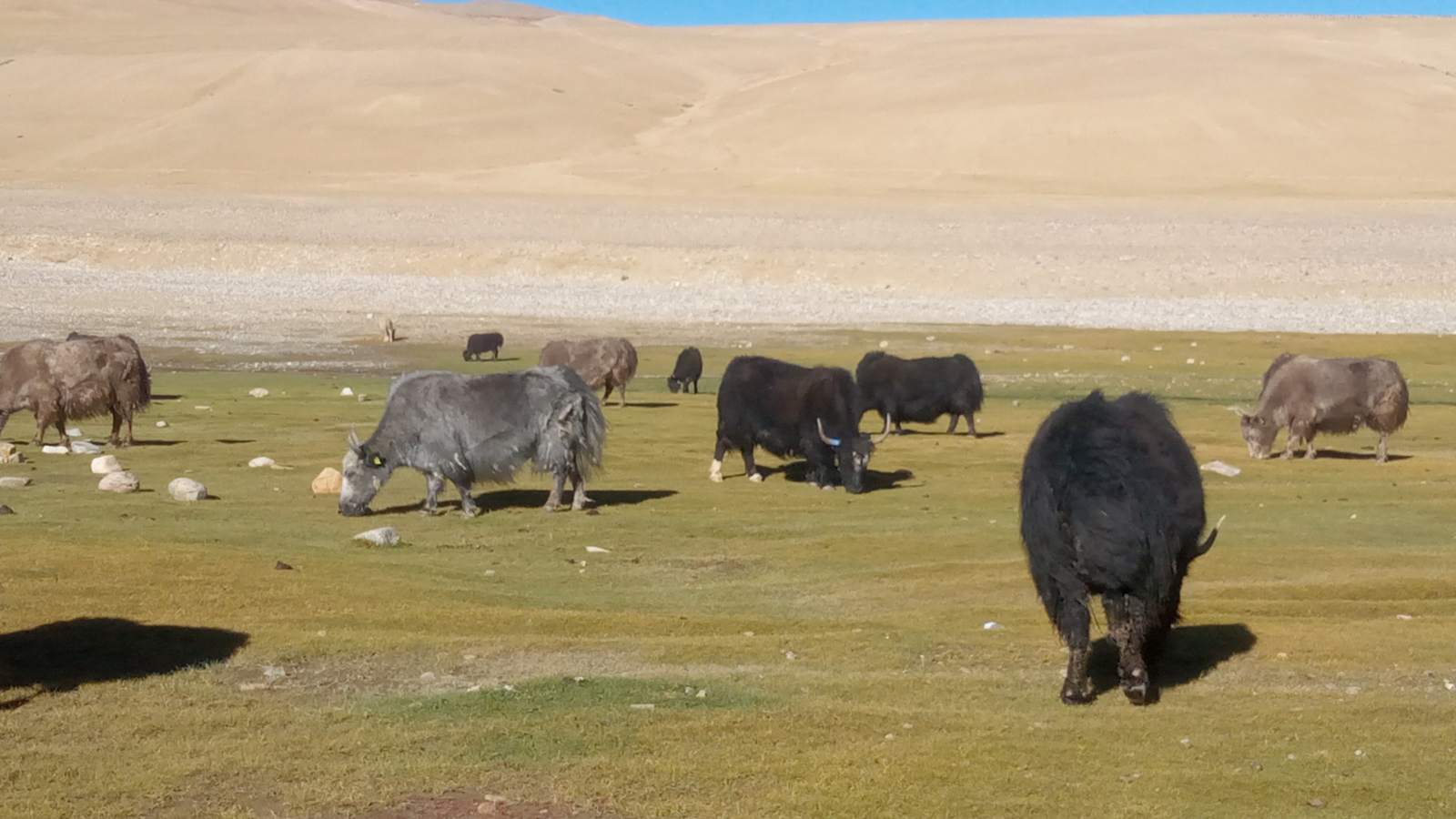
This blog delves into the lives of the Changpa community, a near-invisible pastoral nomadic community in Ladakh and a group largely unknown to mainstream society.
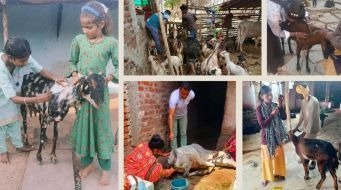
In this context, the ‘Pashu Sakhis’ programme trains local women to become Community Animal Care Service Providers (CASP). These Pashu Sakhis offer essential livestock care and guidance, empowering rural women and improving animal health.
By Categories
By Tags
In our Must Watch – From the Archives collection, we revisit powerful films that chronicle 32 years of transformation. These stories capture the resilience of rural communities, the strength of collective action and the quiet yet lasting change that numbers alone can’t express.
How Karauli farmers stopped soil erosion using traditional Pagaras, community action, and climate-smart farming to restore land, livelihoods, and resilience
From dust-filled mines to life-giving ponds, Karauli’s communities revive water, farming, dignity, and hope through collective climate resilience efforts
Discover how Pashu Sakhi members transform rural India through doorstep livestock care, stronger livelihoods, healthier animals, and resilient farming communities.
Exploring sustainable farming, social inequality, and policy failures, urging humility and community-led solutions in agriculture and development sector with Dr Divya Veluguri.
Innovation once drove survival and growth. Now, amid climate stress and inequality, it must shift toward impact, resilience, and long-term sustainability.
WOTR’s Annual Report 2024-25, Roots & Resilience, highlights rural resilience through science, technology, and tradition.
Across India, disasters are no longer singular events but a polycrisis—where climate extremes, ecological degradation, water stress, and livelihood insecurity interact and amplify one another